
Maintenance debt: A key strategic metric that determines if you are prepared for the future
Maintenance debt is the value of all planned property maintenance that should have been carried out but has been postponed. This guide shows you how to calculate and visualize this debt, why it grows, and how you can work strategically to reduce it—resulting in better finances, lower risk, and more predictable management.

- Maintenance debt = the sum of all planned measures that have passed their scheduled completion year without being carried out.
- A declining maintenance debt is the clearest sign that an organization is moving from reactive to proactive.
- Organizations that manage their debt proactively pay 25–30% less per measure and secure better financing terms.
- Linked to K3, property value, and bank financing—a management tool for leadership and the board, not just for property management.
What is maintenance debt?
Maintenance debt is the total value of all planned maintenance that should have been carried out—but has been postponed. It is the difference between what a property's maintenance plan says you should have done and what has actually been done.
Think of it as a technical and financial backlog. If your maintenance plan states that the roof should have been replaced four years ago, the windows replaced three years ago, and the facade painted two years ago—but none of these have been done—the sum of the costs for those three measures is your maintenance debt.
In short, it is a key metric that shows how far behind your organization is. Unlike many other metrics, maintenance debt has a direct, concrete link to property value, operating costs, and future risks.
Also read about:
Maintenance planning
[[divider]]
Why is maintenance debt a key strategic metric?
Many property organizations view maintenance debt as a management problem—something technical managers handle in Excel, or something they would rather ignore. However, the organizations that create the most value over time see it differently: maintenance debt is a management tool for leadership and the board.
The reason is simple. Maintenance debt summarizes three of the most important questions a property organization needs to be able to answer:
01.
How large are our future commitments?
A known debt is a debt that can be planned for and reduced. It provides a factual basis for the budgeting and financing process.
02.
Where is the risk greatest?
Debt per property and per component shows where emergency costs are most likely—and enables prioritization.
03.
Are we moving in the right direction?
A maintenance debt that decreases year by year is the clearest sign that an organization has shifted from a reactive to a proactive approach.
Maintenance debt is also a key performance indicator that more external stakeholders are beginning to demand. Banks factor maintenance debt into credit assessments. Auditors and regulatory authorities—especially in the context of housing cooperatives—require it under the K3 framework. And in the public sector, it is an increasingly common requirement in reporting to boards and councils.
Among property owners who work strategically and data-driven with maintenance, more than 80% feel well prepared for future requirements. Among reactive owners, the figure is barely 20%. (Framåt 2026, Planima)
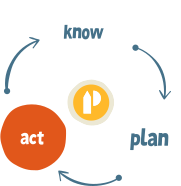
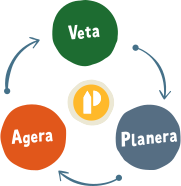
Staying on top of your maintenance debt is fundamentally about Forward-Looking Property Management™—knowing, planning, and acting on your insights. An organization that knows its maintenance debt, plans to reduce it, and can demonstrate that it is moving in the right direction operates fundamentally differently than an organization that reacts to what breaks. That is the difference that determines who will meet the demands of the next decade.
[[divider]]
How do you calculate maintenance debt?
The calculation is basically simple, but it requires an updated maintenance plan:
Maintenance debt
The sum of all planned measures that have passed their planned year of execution, plus all maintenance where the technical service life has passed but the measures have not been carried out
Step by step
01.
Start with your maintenance plan
You need a plan with scheduled measures, years, and costs. Without an updated maintenance plan, you cannot calculate maintenance debt—you can only guess.
02.
Identify delayed measures.
Mark all measures whose planned execution year has passed without them being carried out, as well as all components that have exceeded their technical service life.
03.
Sum the costs
Add up the costs for all delayed measures. That is your maintenance debt.
04.
Calculate per square meter
Divide the total maintenance debt by the property's total area (GFA). This provides a comparable key figure: maintenance debt in SEK/m².
[[divider]]
Why does maintenance debt grow?
Maintenance debt rarely arises from a single major decision. It accumulates gradually—through a series of deferred measures that each seem reasonable to postpone at the time.
01.
Budget constraints
When money is tight, urgent needs always win. A leaking pipe must be fixed today, while a roof replacement is deemed able to wait another year. 77% of Swedish property owners prioritize exclusively urgent measures when the budget is squeezed. (Framåt 2026)
02.
Insufficient allocation
Many organizations allocate too little to maintenance. If sufficient funds are not set aside, even planned measures cannot be carried out—and the debt grows regardless of the level of ambition.
03.
Lack of planning
Without an updated maintenance plan, the debt remains invisible. What is not measured is not managed—and what is not managed escalates.
04.
Key-person dependency
When the person who "has it all under control" leaves the company, the knowledge of what needs to be done often disappears with them. Tasks fall through the cracks, and the debt increases unnoticed.
05.
Organizational inertia
Major measures require decisions, procurement, and project planning. In organizations without clear decision-making processes, the path from "we should do it" to "we are doing it" can take several years. This is especially true in organizations that lack an established strategy for maintenance and proactive management.
91% of property owners say they are regularly forced to choose between urgent measures and long-term investments. It is in that gap – year after year – that maintenance debt builds up. (Framåt 2026, Planima)
[[divider]]
The consequences of ignoring maintenance debt
A known and managed maintenance debt is an asset—it provides a basis for planning, financing, and dialogue with the board and owners. An unknown and constantly growing maintenance debt is a risk that will sooner or later materialize.
01.
Finance: reactive maintenance costs more
Deferred maintenance becomes more expensive. Reactive maintenance is on average 25–30% more expensive than planned maintenance. Individual measures that are postponed for too long can cost 2–5 times more. It is the difference between investing and firefighting.
02.
Financing and property value
Banks are increasingly looking at maintenance debt when reviewing loan applications. A property owner with high and uncontrolled maintenance debt risks worse terms or rejection. During a transaction, buyers may factor deferred maintenance into the pricing—plus a risk premium. Furthermore, component depreciation under the K3 regulatory framework makes maintenance debt visible on the balance sheet.
03.
Sustainability and climate
Postponed energy measures—such as window replacements, additional insulation, or ventilation upgrades—result in higher energy consumption for every year they are delayed. With stricter EU requirements and rising energy prices, the costs accumulate quickly and create a gap in meeting sustainability goals.
04.
Trust and quality of living
In housing companies and housing cooperatives, tenants and members notice when maintenance is neglected. Worn-out stairwells, rusty balcony railings, and cold apartments affect resident satisfaction—and trust in the management.

Make the debt visible
You cannot manage what you do not measure. The first step is to calculate the maintenance debt per property and for the entire portfolio, and make it a recurring KPI in management and board reporting. Not as a footnote in a technical report, but as a key metric alongside vacancy rates and net operating income.
Create a realistic plan
A maintenance debt of 50 SEK/sq ft does not need to be addressed in a single year. But it does need a plan. Prioritize the measures with the greatest consequences if further delayed—plumbing, roofs, load-bearing structures. Set clear annual goals and link the allocation level to the plan, not to what is "usually" allocated.
An organization that can present a credible debt-reduction plan has a completely different negotiating position with banks and financiers than one that presents an unspecified debt figure.
Work proactively, not reactively
Every dollar invested in preventive maintenance reduces future debt and costs an average of 25–30% less than the corresponding reactive measure. An organization that consistently prioritizes planned maintenance over emergency interventions gradually changes its character—from firefighter to strategist.
With Planima's maintenance platform, maintenance debt is calculated automatically, updated in real-time, and presented as a clear KPI per property and for the entire portfolio. This makes it possible to track the trajectory over time—and to act before the debt becomes unsustainable.
Why maintenance debt is a key metric for different types of property owners
Public housing companies
For municipal housing companies, maintenance debt is as much a board and ownership dialogue issue as it is a property management issue. As a long-term owner responsible for the tenants' living environment, it is a fundamental mission to keep the portfolio in good condition—not just today, but for generations to come.
A quantified maintenance debt highlights when that mission is at risk of being eroded, and provides management and the board with a fact-based argument in those discussions: it is not about what the property management team wants to do, but about what the property portfolio requires.
Municipalities and public properties
Municipalities often manage heterogeneous portfolios—schools, nursing homes, sports halls, cultural centers—with widely varying technical conditions and political priorities. This makes maintenance debt a governance issue: when everything is urgent and the budget is insufficient, what do you choose to do, and what do you choose to leave behind?
A visible maintenance debt per property type and committee provides politicians and officials with a shared basis for decision-making. It shifts the discussion from gut feeling and firefighting to fact-based priorities—and creates transparency for auditors and citizens.
Private Real Estate Companies
For real estate companies with residential portfolios, maintenance debt directly impacts net operating income and transaction value. High and uncontrolled debt increases the risk of unplanned emergency costs, worsens financing terms, and is priced down by buyers during a sale—often with a risk premium on top of the actual maintenance need.
The reverse logic also applies: a company that can demonstrate low and decreasing maintenance debt, with a credible plan, has a stronger negotiating position with banks and investors. In a market where capital allocation is crucial, this is a concrete competitive advantage.
Industrial companies and business owners
Many companies own their premises—factories, warehouses, office buildings—without property management being their core business. This makes maintenance debt a blind spot: property issues compete for budget with production, R&D, and sales, and they often lose.
The consequence is that maintenance debt tends to grow uncontrollably until it manifests as a production stoppage, a leak that destroys inventory, or an energy cost that suddenly cannot be justified. For this type of owner, the most important argument for controlling maintenance debt is not property value—but operational reliability and cost control.
Parishes, congregations, and cultural heritage management
Cultural heritage sites, churches, chapels, and parish halls are often the most maintenance-intensive buildings in a portfolio—they are culturally and historically valuable, technically complex, and have very long maintenance cycles. Maintenance debt in a parish can accumulate over decades without being clearly visible, only to require major interventions once the damage becomes acute.
A structured maintenance plan with a known maintenance debt is also a tool for applying for grants—from the Swedish National Heritage Board, county administrative boards, and foundations—in a credible and well-substantiated manner.
Housing Cooperatives
In a housing cooperative, maintenance debt ultimately determines the level of annual fees. A board that does not keep track of this debt cannot communicate credibly with members about why fees need to be raised—or why they don't.
With the K3 requirement coming in 2026, it is also an accounting requirement: component depreciation assumes that the association knows which components exist and when they need to be replaced.
Read more about Planima for:
Private property ownersMunicipalities & Public HousingManagers & ConsultantsHousing CooperativesChurchesLogistics & Industrial Companies
[[divider]]
Next steps:
Take control of your maintenance debt
Maintenance debt does not disappear on its own. It grows—until it is large enough to force a decision under unfavorable conditions. The smart move is to tackle it while you are still in control of the situation, not the other way around.
With Planima's maintenance platform, your maintenance debt is calculated automatically, allowing you to create a concrete strategy to reduce it. In Planima's maintenance platform, you get:
01.
Strategy
Every client builds their unique strategy with Planima as the foundation. It is about setting your ambition, understanding what it means for your organization, and creating a path to get there. If the goal is to lower your maintenance debt—how will you go about doing it?
02.
Consulting
Through Planima Professional Services and Customer Success, you have access to expert support that helps you navigate complex issues, train your organization, and keep your implementation on track.
03.
Data
The Planima platform is built on insights from over 25,000 maintenance plans. You aren't planning in a vacuum, but against industry-standard pricing data, intervals, and benchmarks.
04.
Planning tool
The market-leading tool for maintenance planning, built to keep track of maintenance debt and manage the entire lifecycle from inventory to follow-up.
With the help of Planima, you can also visualize both the debt and your maintenance plan in a way that works for both property management and the boardroom.
All in all, this makes maintenance planning more than just a document: it becomes a way of working that creates predictability, lower costs, and clear sustainability gains—year after year.
Whether you want to dive deeper into industry insights, get started with digital inventory, or see how Planima can support your organization, there is a natural path forward.
Book a demoIndustry Insights - Forward 2026Read about the KPA methodology
FAQ
Frequently asked questions about maintenance debt
Yes. In Planima's planning tool – part of the maintenance platform – maintenance debt is calculated automatically based on your maintenance plan. It is updated in real time and shown as a key metric per property and for the entire portfolio.
In a housing company: the board and property management leadership. In a housing cooperative: the board. In a municipality: the responsible department and, ultimately, the political decision-makers. Maintenance debt should be reported to the level that has the mandate to influence budgets and priorities – not stop at the property manager level.
Directly. A buyer or appraiser takes upcoming maintenance needs into account. High maintenance debt lowers market value by roughly the corresponding amount – sometimes more, since the buyer also prices in the risk of unforeseen costs.
In theory, yes – if all planned actions have been carried out according to plan. In practice, though, the vast majority of properties have some maintenance debt. What matters is that it's visible, under control and backed by a credible plan for addressing it.
Maintenance cost is what you actually spend on maintenance each year. Maintenance debt is the accumulated value of everything you should have done but haven't. A low maintenance cost in a single year can therefore increase maintenance debt – if you spend less than the plan requires.
Present it as a key metric: total maintenance debt, maintenance debt per m², and its development over time. Show the three to five individual actions that contribute most to the debt – and the financial consequences of not acting. A reduction plan that shows the direction is often more convincing than a single figure.
No. Technical debt is a term from software development. Maintenance debt is specifically about deferred property maintenance – the total value of planned actions that have not been carried out.