
Maintenance planning as a strategy: The complete guide for leaders in the real estate industry
This guide is not a manual for creating a maintenance plan. It is written for leaders in the real estate industry who want to understand why only 6% of Swedish property owners work strategically with their maintenance—and what it takes for your organization to be among them.

- Only 6% of Swedish property owners work strategically with maintenance – the rest navigate reactively
- The difference isn't better plans, it's a different way of working: The KPA methodology (Know, Plan, Act)
- Strategic maintenance planning reduces costs by 25–30% compared to reactive maintenance
- This guide shows you how to move from reactive to proactive – regardless of portfolio size
What is maintenance planning?
A long-term maintenance plan is the difference between a property owner who is constantly putting out fires and one who has full control over costs, condition, and the future. Yet, Planima's industry report "Framåt 2026" shows that only 6% of Swedish property owners work strategically and data-driven with their maintenance. The rest navigate by gut feeling, Excel files, and reactive decisions.
Maintenance planning is the systematic work of understanding, planning, and managing a property's long-term maintenance needs.
It is not just about creating a document – a maintenance plan – but about establishing a continuous workflow that provides control over the property's technical condition and financial requirements, in both the short and long term.
A maintenance plan describes which measures need to be taken, when they should be carried out, and what they are estimated to cost. But maintenance planning as a discipline is broader: it includes inventory, inspection, prioritization, budgeting, follow-up, and strategic management.
Static maintenance plan or strategic maintenance planning?
Most property owners today have some form of maintenance plan. Fewer have maintenance planning that actually works—and the difference is greater than it seems.
A static plan is created at a single point in time, is accurate the day it is written, and loses relevance the day it is filed away as a forgotten PDF in a folder. Strategic planning is something else: it is living, linked to budgets and decisions, and kept up to date by the organization itself.
Planning that truly works is cyclical: you collect data, create a plan, implement measures, follow up on the results, and start over—with better insights the next time. That is the shift the KPA methodology is built for.
[[divider]]
4 reasons why traditional maintenance planning is not enough
The problem is well-known but underdiagnosed: most organizations have plans but lack planning. The document exists, but it doesn't drive budgets or decisions. Do you recognize any of these four patterns?
01.
Treating the plan as a project, not a process.
A plan that is created once and then exists without guiding decisions provides a false sense of security. The next time the budget is tight, it will be just as difficult to defend long-term needs against urgent ones.
02.
Waiting for the complete picture.
Organizations that wait to inventory everything before they start planning are acting without a foundation in the meantime. A "good enough" plan that starts driving decisions next quarter is always better than a perfect plan in eighteen months.
03.
Owning the tool, but not the discipline.
The most common obstacle to maintenance planning delivering results is not a lack of plans or systems—it is that maintenance issues do not carry enough weight in the organization's decision-making processes. This requires conscious ownership by the management team.
04.
Planning property by property instead of across the entire portfolio.
If you only look at one property at a time, you miss out on the coordination effects that represent one of the greatest potential savings in a portfolio.
[[divider]]
Why is maintenance planning so important?
01.
Financial predictability
The most obvious benefit: you know what maintaining the property costs. Not just next year, but for the next 30–50 years.
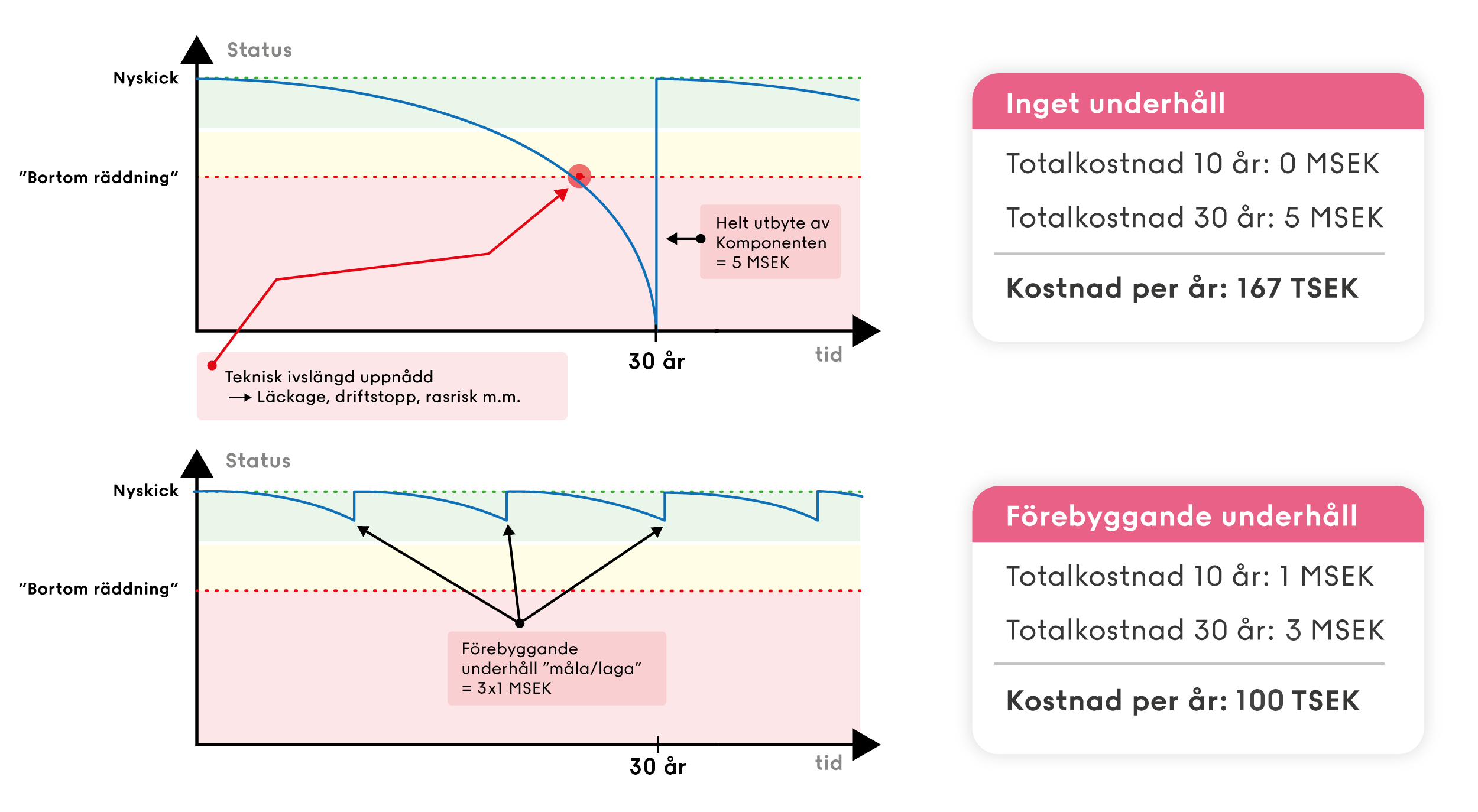
According to international studies, reactive maintenance is 25–30% more expensive than planned, preventive maintenance. Yet Framåt 2026 shows that 77% of Swedish property owners prioritize only urgent work when the budget is tight.
With a forward-looking strategy where maintenance planning is long-term, proactive, and living, the maintenance plan becomes a leading strategic governing document that provides the conditions to both keep properties in better condition and simultaneously create predictability, lower costs, and significant sustainability gains.
02.
Maintenance debt – the hidden risk
When planned maintenance is postponed, a maintenance debt accumulates—a strategic and financial risk that affects property value, operating costs, and tenant security.
03.
Reporting and transparency
If you work in an organization where maintenance is relevant to more than just yourself—such as management, the board, political committees, or banks—maintenance planning is the foundation for credible reporting.
04.
Sustainability as an integral part of property management
The EU Taxonomy, CSRD reporting, and increased scrutiny from banks mean that sustainability can no longer be a side project. With maintenance planning as a foundation, you can integrate energy measures, material choices, and climate adaptation directly into the planning cycle.
[[divider]]
Traditional maintenance planning:
How it used to be
A long road to a value-creating maintenance plan
Historically, maintenance planning has followed a linear pattern: hire a consultant, inspect all properties over several months, compile a plan into a document or Excel file, present it to management—and then repeat the process in 5–10 years.
This has provided the industry with essential building blocks: concepts such as maintenance plans, inspection reports, maintenance intervals, maintenance costs per square meter, and maintenance debt. A maintenance plan that specifies *what* needs to be done, *when*, and at *what cost* remains the foundation.
Important distinction: maintenance planning is about planning – not detailed design. The design comes later. Planning provides an overview and aims to support decisions and budgeting (approx. +/– 15% precision). Start rough – you can always refine as you go.
The organization is forgotten in maintenance planning
The traditional way of working has clear limitations. The process is slow—it can take 6–12 months or more before the entire portfolio is inventoried and an actionable plan is in place. In the meantime, decisions are made without proper data. Consequently, the Plan quickly becomes outdated if it is not updated continuously. And perhaps most importantly: it often lacks organizational buy-in. The Plan exists, but it does not drive decisions, budgets, or priorities.
Forced into short-term maintenance plans
In Planima's national industry report Forward to 2026, 91% of respondents state that they are regularly forced to choose between emergency measures and long-term investments. This does not indicate a lack of plans—it indicates a lack of a workflow that makes plans useful in everyday operations.
[[divider]]
Forward-looking maintenance planning:
The new way to manage your properties
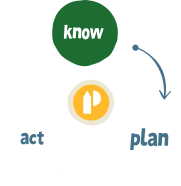
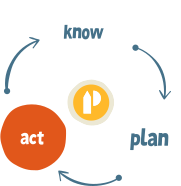
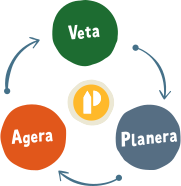
What separates the 6% who work strategically and data-driven from the rest is not that they have a better plan. It is that they have a better *workflow*. Planima calls this Forward-Looking Property Management™, and it is based on the KPA methodology – Know, Plan, Act.
KPA is a cyclical framework. Instead of treating maintenance planning as a project with a beginning and an end, it treats planning as a continuous process where each cycle provides better data, better plans, and better results.
The five principles of the KPA methodology
Before diving into the practical work of property management, you need a compass. The most successful organizations have defined why they do it and what they want to achieve – not just how it should be done. Here are five principles that should permeate all maintenance work:
01.
Proactivity
Take action in good time, before the condition of components deteriorates to the point where they cause consequential damage or emergency operational disruptions. It sounds obvious. But 77% of property owners in Sweden prioritize only emergency measures when budgets are tightened. The principle is simple to understand and difficult to maintain – without the right structure.
02.
Cost-efficiency
Maximize the value of every maintenance dollar by coordinating, procuring smartly, and planning measures at the right time. Preventive maintenance costs on average 25–30% less than reactive maintenance.
03.
Sustainability
Think in terms of life cycles. Choose materials and methods with the lowest resource consumption over time. And weave energy and climate measures into maintenance as a natural part of the process – not as a separate project that always ends up at the back of the line.
04.
Predictability
A maintenance plan that actually drives the budget gives you something invaluable: the ability to tell your board, committee, or bank that you know what maintenance costs—not just for the next quarter, but for the next 30–50 years.
05.
Organizational alignment
Maintenance planning is not a document. It is a way of working that requires the right people to be involved, clear roles to be defined, and the plan to be updated as circumstances change. A plan without an organizational home quickly loses its value.
These principles act as a filter for all decisions: from which measures you prioritize in the budget to which materials you specify in the procurement process.

Get a quick handle on the current situation
The traditional way to start maintenance planning has been to conduct a complete inventory and inspection of the entire portfolio before doing anything else. This takes months, costs a lot—and all the while, decisions are being made without a proper foundation.
Forward-looking maintenance planning flips this on its head. The goal of the "Know" phase is not to collect *all* information, but to quickly get a *good enough* picture of the current situation to make proactive decisions and get started immediately.
In practice, this means starting with the data sources you already have: drawings, existing plans, operational data, maintenance requests, and the knowledge already present within the organization. With the right tools and methodology—such as Planima’s Digital Inventory service, which combines AI functionality, benchmark data, and digital drawings—you can have an initial maintenance plan in a matter of hours or days that provides a sufficient foundation to start planning and taking action.
The picture is then refined continuously. Manual inventory and inspections are carried out gradually, property by property, and each round increases the accuracy of the plans. A quick 30–60 minute walkthrough per property annually—combined with an analysis of maintenance requests and tenant feedback—keeps the plan current without the need for a new, full-scale inspection.
The key takeaway: start with "good enough" and improve iteratively—instead of waiting for "perfect" and acting blindly in the meantime.
Create plans that drive operations
Maintenance planning in the KPA methodology is not about creating the perfect document—it is about producing a foundation that makes it possible to make decisions and set budgets. Plan, don't design. Detailed design for procurement comes in the next phase.
From document to decision support
There is an important distinction that many organizations miss: the difference between a plan that exists and a plan that drives action. The right plan links maintenance needs directly to the budget process, board reporting, and procurement decisions. The wrong plan just gathers dust.
Three characteristics define a plan that is actually used:
It has a sufficient time horizon
The major cost drivers in a property portfolio—pipe replacements, roof renovations, facade work—have intervals of 30 to 50 years. A plan that only looks 5 to 10 years ahead provides a false sense of control. By the time you see the needs, it is too late to budget for them.
It is a decision-support tool, not a design document.
A good plan provides enough precision to prioritize and budget—roughly ±15% at the cost level. That is enough to make well-informed decisions. Detailed design belongs in the "Act" phase, not in your planning.
It creates value across the entire portfolio, not just per property.
When you plan for the entire portfolio, coordination opportunities arise that aren't visible if you look at one property at a time. Two buildings undergoing facade renovations in the same year share scaffolding costs. The same type of work across five properties creates procurement volume. This is where planning as a discipline begins to differ from planning as a paperwork exercise.
Read more about what a good maintenance plan should contain in our blog post Checklist: What does a good maintenance plan contain?
Execution is a discipline, not a project
Organizations that consistently execute what they plan treat maintenance as a continuous discipline, not a series of individual projects. This means that procurement starts early enough to provide flexibility, outcomes are documented on an ongoing basis, and deviations are captured – not to report them, but to learn from them for the next cycle.
The final step in the Act phase is what makes the KPA methodology self-reinforcing: every completed action generates actual data that feeds back into the Know phase. Real costs replace estimates. This makes every new planning cycle more accurate than the last – which is the exact reason why organizations that have worked proactively for three to five years will achieve a higher degree of predictability than those just starting out.
Organizational ownership of maintenance planning
The KPA methodology works technically. But what determines whether it works in your organization is whether maintenance planning as a discipline has a clear home in your decision-making structure.
It’s not about having the right number of power users. It’s about embedding maintenance into three processes: the budget process (the plan drives the allocations), the reporting structure (management and the board see the maintenance status regularly), and the procurement process (project planning starts with sufficient lead time).
Framåt 2026 points to a recurring pattern among those who succeed: they have a clear decision-making hierarchy when goals clash. It is not enough to want to work proactively – you need to make proactive work the default option, not the exception.
The simplest health check: ask yourself if your maintenance plan drives next year’s budget, or if next year’s budget drives the maintenance plan. The answer tells you more about the organization’s management culture than most KPIs.
[[divider]]
Maintenance planning for different types of property owners
Maintenance planning looks fundamentally the same regardless of who you are. But the strategic challenges differ.
Public housing companies
You report to a board and, by extension, to politicians and owners. Maintenance planning provides you with data that stands up to scrutiny – and helps you manage the tension between short-term politics and long-term property economics. With a transparent maintenance plan, you can justify why an investment cannot be postponed for another term.
Municipalities
You may manage schools, nursing homes, and sports facilities – properties with different technical requirements and different political ownership structures. A structured maintenance plan creates a common language and makes it possible to prioritize cross-sectorally without it becoming a political battle over money.
Private Real Estate Companies
Maintenance debt is a measurable financial risk that shows up directly in net operating income and property valuations. With structured maintenance planning, maintenance costs become predictable, procurement becomes more cost-effective, and the management organization is freed from reactive firefighting.
Housing Cooperatives
Since 2024, the Cooperative Housing Act requires new housing cooperatives to have a maintenance plan that extends at least 50 years into the future. The K3 regulatory framework effectively requires a well-developed component list. The strongest reason, however, is not legislation – it is that the board can make well-founded financial decisions and the bank sees an organization that is in control.
Read more about Planima for:
Private property ownersMunicipalities & Public HousingManagers & ConsultantsHousing CooperativesChurchesLogistics & Industrial Companies
[[divider]]
Next steps:
get started with strategic maintenance planning
Maintenance planning as a continuous discipline imposes requirements that a single planning tool cannot meet on its own. It requires a combination of strategy, consulting, data, and tools that work together. That is what Planima's maintenance platform is built for.
Strategy – every customer builds their unique strategy with Planima as the foundation. It is about setting the ambition, defining what "under control" actually means for your organization, and creating a path to get there.
Consulting – through Planima Pro and Customer Success, you have access to expert support that helps you navigate complex issues, train your organization, and keep your implementation on track.
Data – The Planima platform is built on insights from over 25,000 maintenance plans. You aren't planning in a vacuum, but against industry-standard pricing data, intervals, and benchmarks.
Planning tools – the market-leading tool for maintenance planning, built to manage the entire KPA cycle from inventory to follow-up.
All in all, this makes maintenance planning more than just a document: it becomes a way of working that creates predictability, lower costs, and clear sustainability gains—year after year.
Whether you want to dive deeper into industry insights, get started with digital inventory, or see how Planima can support your organization, there is a natural path forward.
FAQ
Why is traditional maintenance planning not enough?
The VPA method is Planima's framework for Framåtriktad Fastighetsförvaltning™ — a cyclical way of working in three steps. Know (Veta): collect and structure the right information about the property's condition and needs — not all information, but enough to make well-founded decisions. Plan (Planera): create a plan that optimizes what should be done, when and in what order — with a 30–50 year perspective and +/–15% cost accuracy. Act (Agera): carry out the work, document the outcomes and feed lessons learned back into the next Know phase. It's the last step that makes the method self-reinforcing: every completed action yields better data, which yields better plans, which yields better execution.
Read more about Framåtriktad Fastighetsförvaltning™ and the VPA method.
Three key metrics give a reliable picture: maintenance debt per square meter (measures whether deferred maintenance is increasing or decreasing over time), completion rate (the share of planned actions actually carried out during the year) and how current the plan is (when was it last updated?). An organization in control has declining or stable maintenance debt, a completion rate above 80% and a plan updated less than 12 months ago. Maintenance debt is the most important of the three — it's the only key metric that shows whether the organization is moving forward or backward.
Read more about maintenance debt in Planima's blog post: Maintenance debt – the key metric that shows whether you're in control of your property
The connection is direct. Net operating income — revenue minus operating costs — is affected by maintenance planning in two ways. Preventive maintenance keeps ongoing operating costs down: a well-maintained roof doesn't leak, a well-maintained ventilation system is energy efficient, and well-maintained pipes don't require emergency work in the middle of winter. And the property's market value is directly affected by maintenance debt — a buyer or appraiser deducts upcoming maintenance needs from the price. A property with well-managed maintenance planning and low maintenance debt is easier to finance, easier to value and generates a more stable net operating income. Read more in the blog post What is net operating income for property? Guide and 3 worked examples
The short answer: the head of property management or an equivalent role with the mandate to influence budgets and priorities. The longer answer is that one person isn't enough — maintenance planning needs to be anchored in three processes to work: the budget process, the reporting structure and the procurement process. If the plan exists but isn't visible in any of these contexts, it's a document, not a management tool. The organizations that succeed best are those where maintenance status is reported to management and the board as a key metric — not just handled internally by property management.
A simple test: does your maintenance plan drive next year's budget, or does next year's budget drive your maintenance plan? Proactive organizations budget based on what the property needs. Reactive ones do whatever the budget happens to allow. Framåt 2026 shows that only 6% of Swedish property owners can answer yes to the first option.
A static maintenance plan is created at one point in time and quickly loses relevance if it isn't kept alive. Strategic maintenance planning is the way of working that makes the plan actually drive decisions: linked to the budget, continuously updated and cyclical by nature — every completed cycle yields better data and sharper decisions next time.
Since 2024, new Swedish housing cooperatives have been legally required to have a maintenance plan covering at least 50 years ahead. The K3 accounting framework assumes component depreciation, which in practice requires a thorough plan. For other property owners there is no general legal requirement, but banks and insurance companies are increasingly asking for one.