
From major renovations to award-winning property management
Challenge
From large to small
Historically, Svenska Bostäder relied on extensive, full-scale renovation projects across its portfolio, which meant that tenants had to move out while the facilities were renovated in their entirety. “I live in a house myself. I would never dream of moving my family out into a tent in the yard or garden and then doing everything in every room at the same time. We wanted to go back to a simpler model where we do things when it’s time to do things,” explains Ulf. But major disruption to residents’ everyday lives was only one of the challenges. The old strategy also meant that problems could get worse while waiting for a full renovation, or that things were replaced prematurely, which in both cases is costly and unsustainable for the environment. The latter is something Ulf particularly emphasizes. “We can’t look our children in the eye if we throw out things that have a long service life left.”
Solution
Culture an important part of the change
To meet these challenges, Svenska Bostäder began implementing a new strategy where they put resources where they are needed, when they are needed. But how do you succeed with that when the facilities were previously handled as wholes where everything is renovated at once? To begin the journey, the organization first needed to know what maintenance needs they had over the coming five-year period. They took inventory of and sorted the information that existed in the organization and entered it into Planima’s tool. After that, they could analyze which facilities had the greatest needs. Today, Svenska Bostäder uses the full suite of Planima features to pull together the complex work with the portfolio. According to Ulf, it has become a key factor in the company managing to change how it works, and at the beginning he pushed hard to get employees to enter data into the system. “And already in the spring I told the organizations that everything that goes into the budget has to go into Planima, otherwise there’s no money. That was pretty much the only clear directive I had,” he says. The shift in maintenance was also very much a cultural one, where they had to change how they worked. It’s not always easy to get everyone on board with a change process. An important part was therefore involving the local organization and creating a decentralized infrastructure. By involving the districts and their managers, a sense of ownership and responsibility for maintenance was created. “Our job as maintenance strategists and maintenance planners hasn’t primarily been to do maintenance planning, but to help the organizations become maintenance planners.”
Results
Award-winning, successful, and decentralized maintenance
The work with the new strategy has led to many improvements, not least environmental ones. Something they were recognized for with the Tänk om award 2024, presented by Architects’ Climate Action Network, Acan Sverige. Svenska Bostäder now has a clearer picture of its future maintenance needs and can make informed decisions about upcoming projects. One concrete result is that the budget process has become simpler, but Ulf also expresses satisfaction with how the organization has embraced the new way of working. He says that a newly hired garden coordinator whom he hadn’t even met looked at the maintenance system and concluded that she needed more money. “For these new hires, it becomes obvious right from the start. I don’t mean that I was happy because she wanted more money. I was happy because we had a way of communicating between the strategic and operational levels.” And it’s precisely the decentralized approach that is the key to success when the business is moving toward more sustainable property management, because it creates engagement in the organization, he says.
“I would say without hesitation that what has been our success factor is that we’ve brought along the local organization, which consists of operations managers and maintenance planners. We now have a decentralized approach in our maintenance system.”
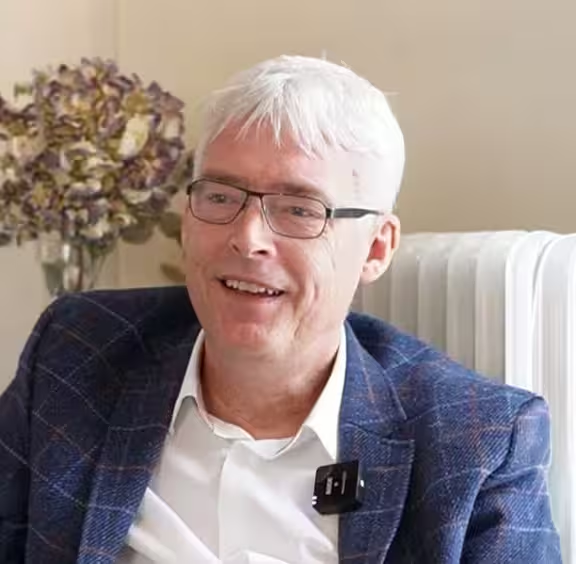
Ulf Viktorsson, head of technical services and maintenance, Svenska Bostäder
Going forward, Svenska Bostäder plans to continue developing its strategies, including integrating predictive maintenance and exploring the possibilities of AI. Ulf emphasizes the importance of long-term planning: “We’re sitting here looking out over Gamla stan with buildings from the 1600s. They should stand for at least another four hundred years, I think.”